Monday, 22 January 2018

Beware! These “Forced” Chrome And Firefox Extensions Are Almost Impossible To Remove

access denied


Google Chrome is often labeled as one of the best web browsers around for all the right reasons. Players like Firefox are competing by adding innovative features, but Chrome continues to enjoy an unparalleled popularity. However, this doesn’t mean that Chrome is 100% secure. A security researcher has spotted malicious add-ons that’s almost impossible to delete.
These extensions have been spotted in both Mozilla Firefox and Google Chrome. They use techniques to redirect users away from pages where they can remove the extensions and try to hijack traffic for driving clicks on other web pages.

Chrome and Firefox both are affected

For Chrome, the researcher found an extension named Tiempo en colombia en vivo. It gets pushed via a method called “Forced Chrome Extension.”
To drive away users from the extensions page, it redirects the uses from chrome://extensions/ to chrome://apps/?r=extensions. On this page, only installed apps are listed. Blocking JS in Chrome or starting Chrome with disabled extensions doesn’t help as well.
A method to stop the extensions from operating is by renaming the 1499654451774.js file in the extensions folder. It shows up in the extensions list as corrupted.
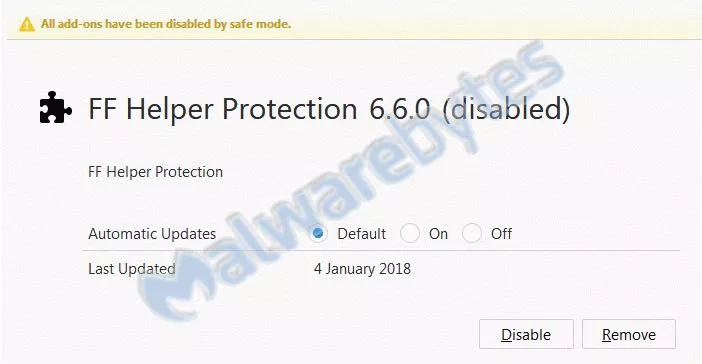
forced extensions chrome

Malwarebytes also found a similar extension in Firefox with name PUP.Optional.FFHelperProtection. It blocks about:addons in background.js and prohibits the user from removing it.
Removal in Firefox is comparatively easier as one can see all the installed extensions by running the browser in safe mode.
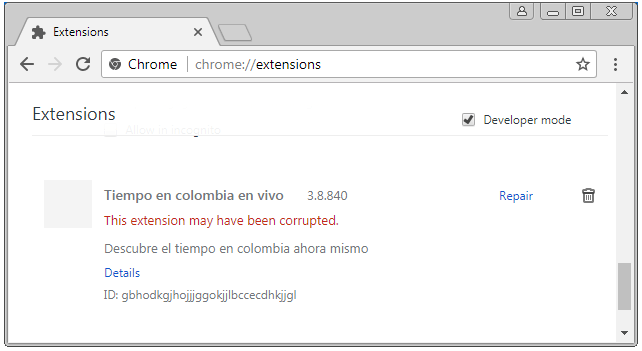
forced extensions firefox

While the exact extensions might not exist on the online stores at the moment, their modified versions continue to prevail. As they arrive on the machines of users via forced installs, it’s difficult to avoid them every single time. So, the users are advised to surf the web with caution and use recommended security methods. Before downloading extensions, users should also read their descriptions and reviews carefully.
It’s also worth noting that these extensions highlight a picture that involves Google’s failure to ensure proper scrutiny when it comes to Play Store or Chrome Store. So, unless Google makes its review process for third-party extensions and apps more stringent, such problems aren’t going to go away.

Saturday, 20 January 2018

15-Year-Old Schoolboy Posed as CIA Chief to Hack Highly Sensitive Information


A notorious pro-Palestinian hacking group behind a series of embarrassing hacks against United States intelligence officials and leaked the personal details of 20,000 FBI agents, 9,000 Department of Homeland Security officers, and some number of DoJ staffers in 2015.
Believe or not, the leader of this hacking group was just 15-years-old when he used "social engineering" to impersonate CIA director and unauthorisedly access highly sensitive information from his Leicestershire home, revealed during a court hearing on Tuesday.

Kane Gamble, now 18-year-old, the British teenager hacker targeted then CIA director John Brennan, Director of National Intelligence James Clapper, Secretary of Homeland Security Jeh Johnson, FBI deputy director Mark Giuliano, as well as other senior FBI figures.

Between June 2015 and February 2016, Gamble posed as Brennan and tricked call centre and helpline staff into giving away broadband and cable passwords, using which the team also gained access to plans for intelligence operations in Afghanistan and Iran.

The teenager also taunted his victims and their families, released their personal details, bombarded them with calls and messages, downloaded and installed pornography onto their computers and took control of their iPads and TV screens.

He also made hoax calls to Brennan's home and took control of his wife’s iPad.

At one point, Gamble also sent DHS secretary Johnson a photograph of his daughter and said he would f*** her, phoned his wife, leaving a voicemail message which said: "Hi Spooky, am I scaring you?," and even managed to get the message "I own you" on the couple's home television.

Gamble was arrested in February 2016 at his council home in Coalville and last October he pleaded guilty to 8 charges of "performing a function with intent to secure unauthorised access" and 2 charges of "unauthorised modification of computer material."
Gamble said he targeted the US government because he was "getting more and more annoyed about how corrupt and cold-blooded the US Government" was and "decided to do something about it."


Gamble's defence said he was technically gifted but emotionally immature and has an autistic spectrum disorder, at the time of his offending, he had the mental development of a 12 or 13-year-old.

Also, the defence said, at no point did Gamble attempt to profit from his actions.

Out of 10 counts, Gamble previously admitted 8 charges of performing a function with intent to secure unauthorised access.

The teenager will be sentenced when the hearing resumes at a later date.

Two other members of Crackas With Attitude hacking group, Andrew Otto Boggs and Justin Gray Liverman, were arrested by FBI in September 2016 and had already been sentenced to five years in federal prison.

Friday, 19 January 2018

Facebook Password Stealing Apps Found on Android Play Store


Even after many efforts made by Google last year, malicious apps always somehow manage to make their ways into Google app store.

Security researchers have now discovered a new piece of malware, dubbed GhostTeam, in at least 56 applications on Google Play Store that is designed to steal Facebook login credentials and aggressively display pop-up advertisements to users.

Discovered independently by two cyber security firms, Trend Micro and Avast, the malicious apps disguise as various utility (such as the flashlight, QR code scanner, and compass), performance-boosting (like file-transfer and cleaner), entertainment, lifestyle and video downloader apps.
Like most malware apps, these Android apps themselves don’t contain any malicious code, which is why they managed to end up on Google's official Play Store.

Once installed, it first confirms if the device is not an emulator or a virtual environment and then accordingly downloads the malware payload, which prompts the victim to approve device administrator permissions to gain persistence on the device.
facebook-account-hacking
"The downloader app collects information about the device, such as unique device ID, location, language and display parameters," Avast said. "The device’s location is obtained from the IP address that is used when contacting online services that offer geolocation information for IPs."

How Android Malware Steals Your Facebook Account Password


As soon as users open their Facebook app, the malware immediately prompts them to re-verify their account by logging into Facebook. Instead of exploiting any system or application vulnerabilities, the malware uses a classic phishing scheme in order to get the job done.

These fake apps simply launch a WebView component with Facebook look-alike login page and ask users to log-in. Apparently, WebView code steals the victim's Facebook username and password and sends them to a remote hacker-controlled server.

"This is most likely due to developers using embedded web browsers (WebView, WebChromeClient) in their apps, instead of opening the webpage in a browser," Avast said.

Trend Micro researchers warn that these stolen Facebook credentials can later be repurposed to deliver "far more damaging malware" or "amass a zombie social media army" to spread fake news or generate cryptocurrency-mining malware.
Stolen Facebook accounts can also expose "a wealth of other financial and personally identifiable information," which can then be sold in the underground markets.

Security firms believe that GhostTeam has been developed and uploaded to the Play Store by a Vietnamese developer due to considerable use of Vietnamese language in the code.

According to the researchers, the most users affected by the GhostTeam malware reportedly resides in India, Indonesia, Brazil, Vietnam, and the Philippines.

Besides stealing Facebook credentials, the GhostTeam malware also displays pop up adverts aggressively by always keeping the infected device awake by showing unwanted ads in the background.
android-malware
All the apps have since been removed by Google from the Play Store after researchers reported them to the company. However, users who have already installed one such app on their devices should make sure they have Google Play Protect enabled.
Play Protect security feature uses machine learning and app usage analysis to remove (i.e. uninstall) malicious apps from users Android smartphones in an effort to prevent any further harm.

Although malicious apps floating on the official app store is a never-ending concern, the best way to protect yourself is always to be vigilant when downloading apps, and always verify app permissions and reviews before you download one.

Moreover, you are strongly advised to keep a good antivirus app on your mobile device that can detect and block such threat before they infect your device, and most importantly, always keep your device and apps up-to-date.

Wednesday, 17 January 2018

BitTorrent For Downloading? This Security Flaw Lets Hackers Control Your PC Remotely

transmission flaw torrent

Even though the popularity of streaming websites is rising at a fast pace, BitTorrent remains a premier source of entertainment content source for a large chunk of people using the web. With the help of tons of popular torrent sites (there are some completely legal ones as well) and BitTorrent clients, people download content.

A recent critical vulnerability spotted by Google’s Project Zero team targets the popular Transmission BitTorrent app. By exploiting this flaw, a hacker can execute malicious code on the users’ computer, according to Ars Technica.

Last week, the Project Zero researchers published the proof-of-concept attack code. It’s worth noting that Project Zero normally refrains itself from making the details of such flaws public for 90 days or until the fix is released. However, in this case, the flaw was made public only 40 days after the initial report. This happened because the report included a patch to fix the vulnerability but Transmission developers didn’t respond on their private security mailing list.
After the public release of the flaw, the downstream projects using the Transmission project would be able to inculcate the patch in their implementations.

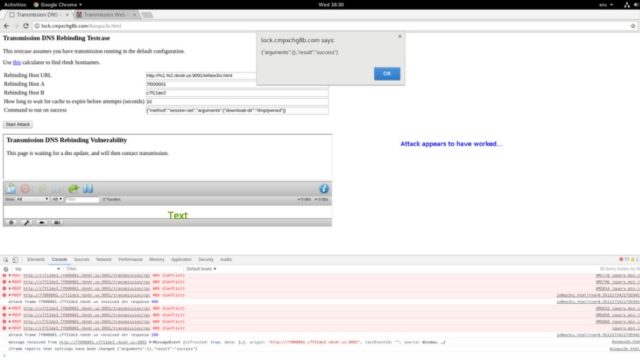
With the help of a hacking technique called domain name system rebinding, this exploit can control the Transmission interface when the target visits a malicious website. This can be further made easier by creating a DNS name which attacker is authorized to communicate with.
After controlling the Transmission interface, the attacker needs to change the torrent download directory to home and download a torrent named .bashrc. The attacker can also configure Transmission to run any command after the download has completed.
The Transmission developers have promised to release the fix as soon as possible. However, no specific date was given.

Tuesday, 16 January 2018

Credit Card Fraud Reported After People Purchased OnePlus Smartphones

OnePlus Credit Card Fraud main


if you purchased OnePlus devices through the official site in the last few months, your credit card details could be at risk. Many users who bought OnePlus devices later reported suspicious activity on their credit card statement.
According to a security firm Fidus, the issue could be associated with how the payment process happens, not the OnePlus website. The site is developed using the Magento eCommerce platform which the researchers say has been targeted by attackers multiple times.


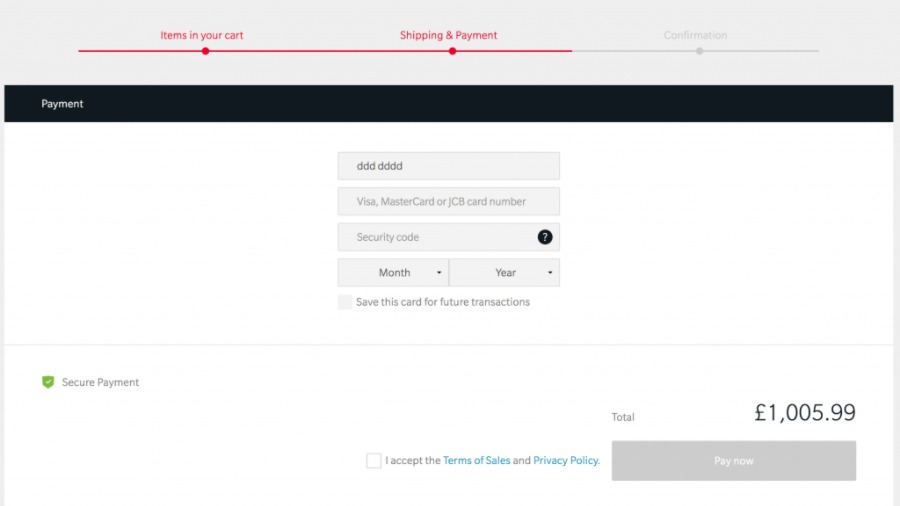
As the payments page is hosted on the OnePlus site, the credit card details can be intercepted by the attackers. They have a small window before the details get encrypted and sent to the third-party server for processing.
OnePlus Credit Card fraud payment page


In their official response made on the OnePlus forum, the Chinese smartphone maker said they’re investigating the credit card fraud reports and agreed that the buyers who used their credit cards directly to make purchases are among the affected ones.

OnePlus said all the payment processing is done on the servers of their payment service provider. When a buyer chooses “Save this card for future tractions,” the card details are stored on the third-party server. The OnePlus site only saves an encrypted token which is used by the payment server to fetch the payment details of the buyer.
OnePlus also clarified that they have been shifting away from Magento platform and re-designing their website with custom code. Also, they never used Magento’s payment module. So, it’s unlikely their site is affected by the Magento bugs discovered in the past.
While the company was quick to issue a statement, it doesn’t seem it would of much help to the buyers who got money sucked from their accounts. People who are seeing unknown transactions in their statement are advised to contact their banks immediately and get things sorted.

Skygofree — Powerful Android Spyware Discovered

Security researchers have unveiled one of the most powerful and highly advanced Android spyware tools that give hackers full control of infected devices remotely.
Dubbed Skygofree, the Android spyware has been designed for targeted surveillance, and it is believed to have been targeting a large number of users for the past four years.

Since 2014, the Skygofree implant has gained several novel features previously unseen in the wild, according to a new report published by Russian cybersecurity firm Kaspersky Labs.

The 'remarkable new features' include location-based audio recording using device's microphone, the use of Android Accessibility Services to steal WhatsApp messages, and the ability to connect infected devices to malicious Wi-Fi networks controlled by attackers.
Skygofree is being distributed through fake web pages mimicking leading mobile network operators, most of which have been registered by the attackers since 2015—the year when the distribution campaign was most active, according to Kaspersky's telemetry data.

Italian IT Firm Behind Skygofree Spyware?

skygofree-android-malware


Researchers at Kaspersky Lab believe the hacker or hacking group behind this mobile surveillance tool has been active since 2014 and are based in Italy—the home for the infamous 'Hacking Team'—one of the world's bigger players in spyware trading.
"Given the many artifacts we discovered in the malware code, as well as infrastructure analysis, we are pretty confident that the developer of the Skygofree implants is an Italian IT company that works on surveillance solutions, just like HackingTeam," said the report.
Kaspersky found several Italian devices infected with Skygofree, which the firm described as one of the most powerful, advanced mobile implants it has ever seen.

Although the security firm has not confirmed the name of the Italian company behind this spyware, it found multiple references to Rome-based technology company "Negg" in the spyware's code. Negg is also specialised in developing and trading legal hacking tools.

Skygofree: Powerful Android Spyware Tool


Once installed, Skygofree hides its icon and starts background services to conceal further actions from the user. It also includes a self-protection feature, preventing services from being killed.
As of October last year, Skygofree became a sophisticated multi-stage spyware tool that gives attackers full remote control of the infected device using a reverse shell payload and a command and control (C&C) server architecture.

According to the technical details published by researchers, Skygofree includes multiple exploits to escalate privileges for root access, granting it ability to execute most sophisticated payloads on the infected Android devices.

skygofree-android-malware-whatsapp


One such payload allows the implant to execute shellcode and steal data belonging to other applications installed on the targeted devices, including Facebook, WhatsApp, Line, and Viber.
"There are multiple, exceptional capabilities: usage of multiple exploits for gaining root privileges, a complex payload structure, [and] never-before-seen surveillance features," the researchers said.
Skygofree’s control (C&C) server also allows attackers to ca

Monday, 15 January 2018

Beware! Fake Spectre & Meltdown Patches Are Infecting PCs With “Smoke Loader” Malware

spectre meltdown malware


One of the most common tactics employed by notorious cybercriminals involves taking advantage of the popular trends and creating fraudulent websites/apps to trick users. It looks like some of the players have tried to exploit the confusion surrounding Meltdown and Sprectre CPU bugs.
Forget buggy updates which are causing numerous problems to the users, Malwarebytes has spotted a fake update package that installs malware on your computer. The firm has identified a new domain that’s full of material on how Meltdown and Spectre affect CPUs.


The website appears to have content from the German Federal Office for Information Security (BSI). However, the website is fraudulent and it hosts a ZIP archive link, which is a piece of malware. The fake file in the archive is Intel-AMD-SecurityPatch-10-1-v1.exe.
In case the user downloads the file and attempts to install it, Smoke Loader malware infects the PC. It further downloads more payloads by connecting to various domains and send encrypted traffic.
The website was also spotted sending fake phishing emails. Here’s a screenshot:

fake_German_site meltdown patch

Malwarebytes has already contacted CloudFlare and Comodo regarding this abuse and the site isn’t resolving anymore. But, it doesn’t mean that hackers aren’t trying to exploit such publicized events.
The end-users are advised to always remain cautious and download updates from the dependable sources only. In case you’re getting direct emails or calls from vendors, take them with a grain of salt.


Beware! These “Forced” Chrome And Firefox Extensions Are Almost Impossible To Remove

Google Chrome is often labeled as one of the best web browsers around for all the right reasons. Players like Firefox are competing by add...